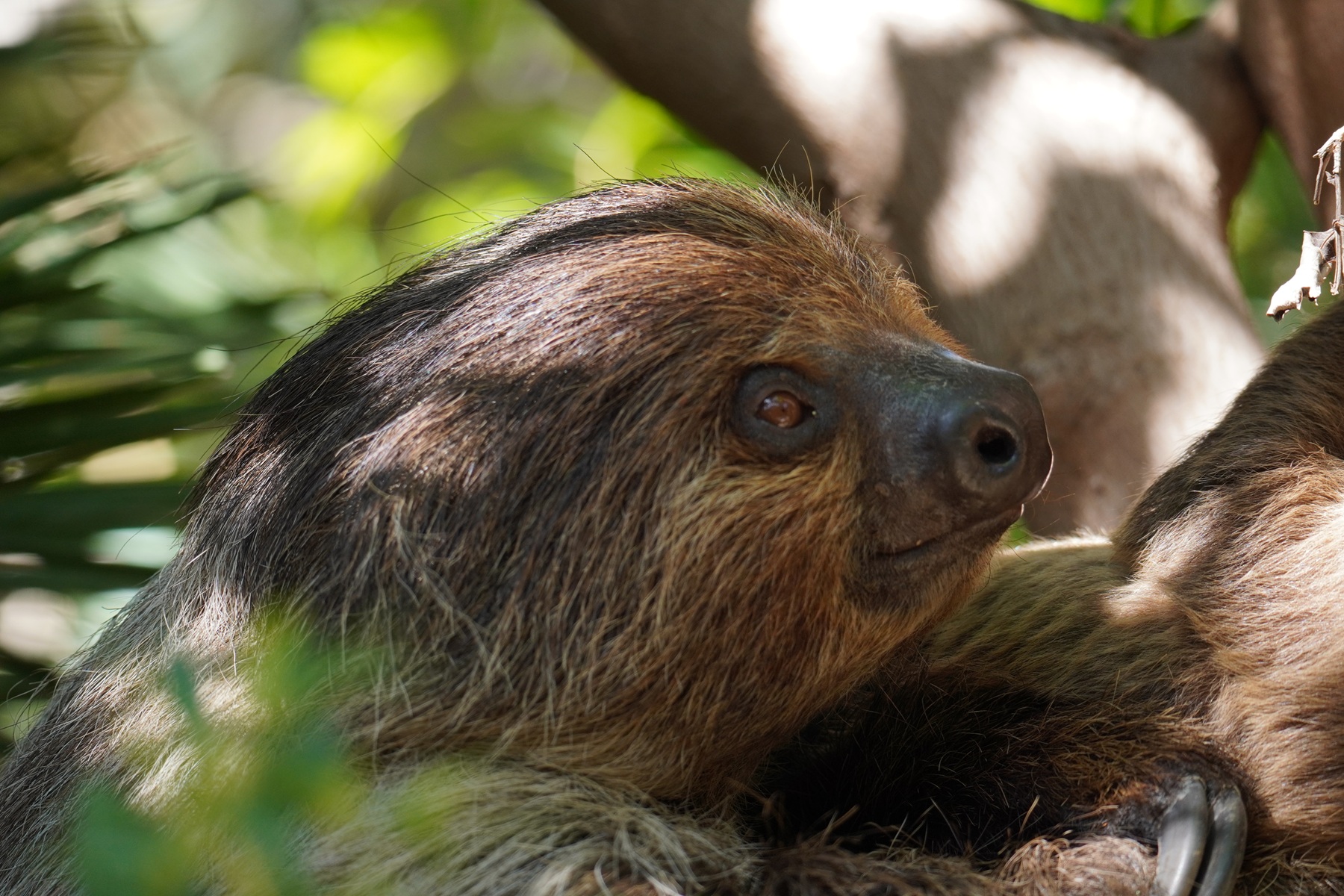
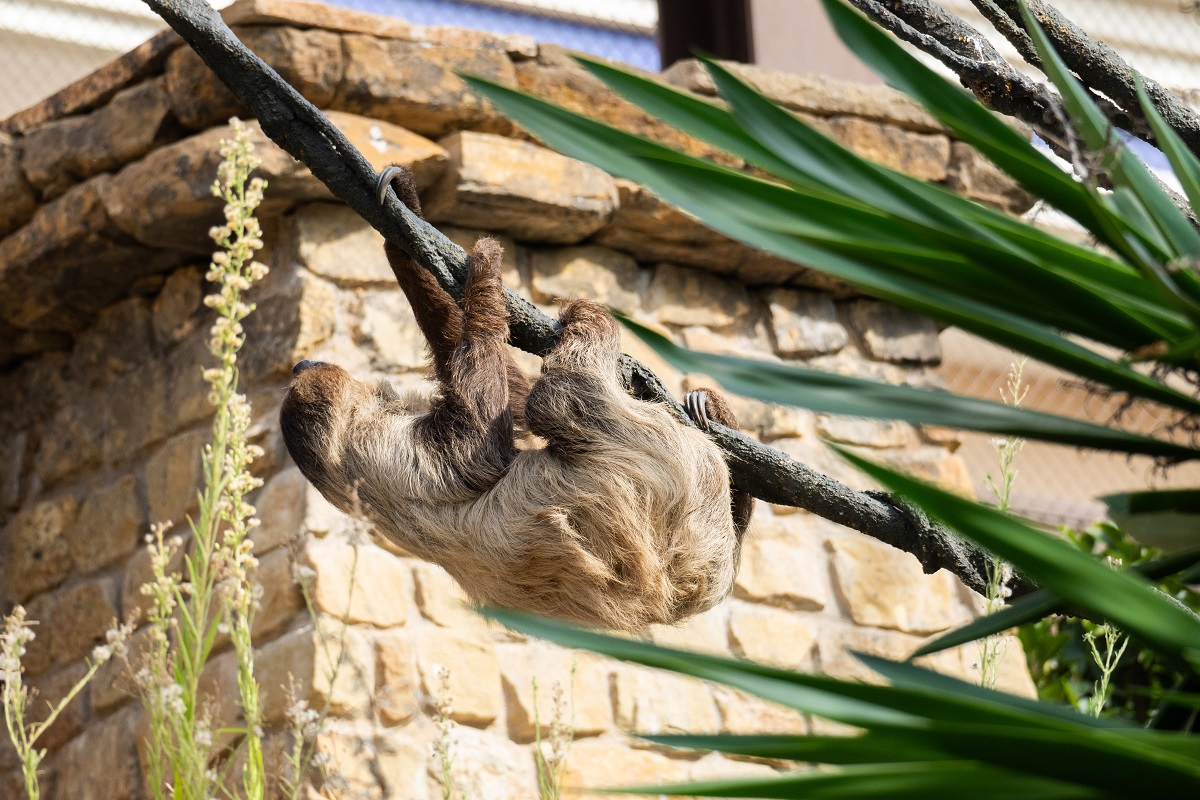
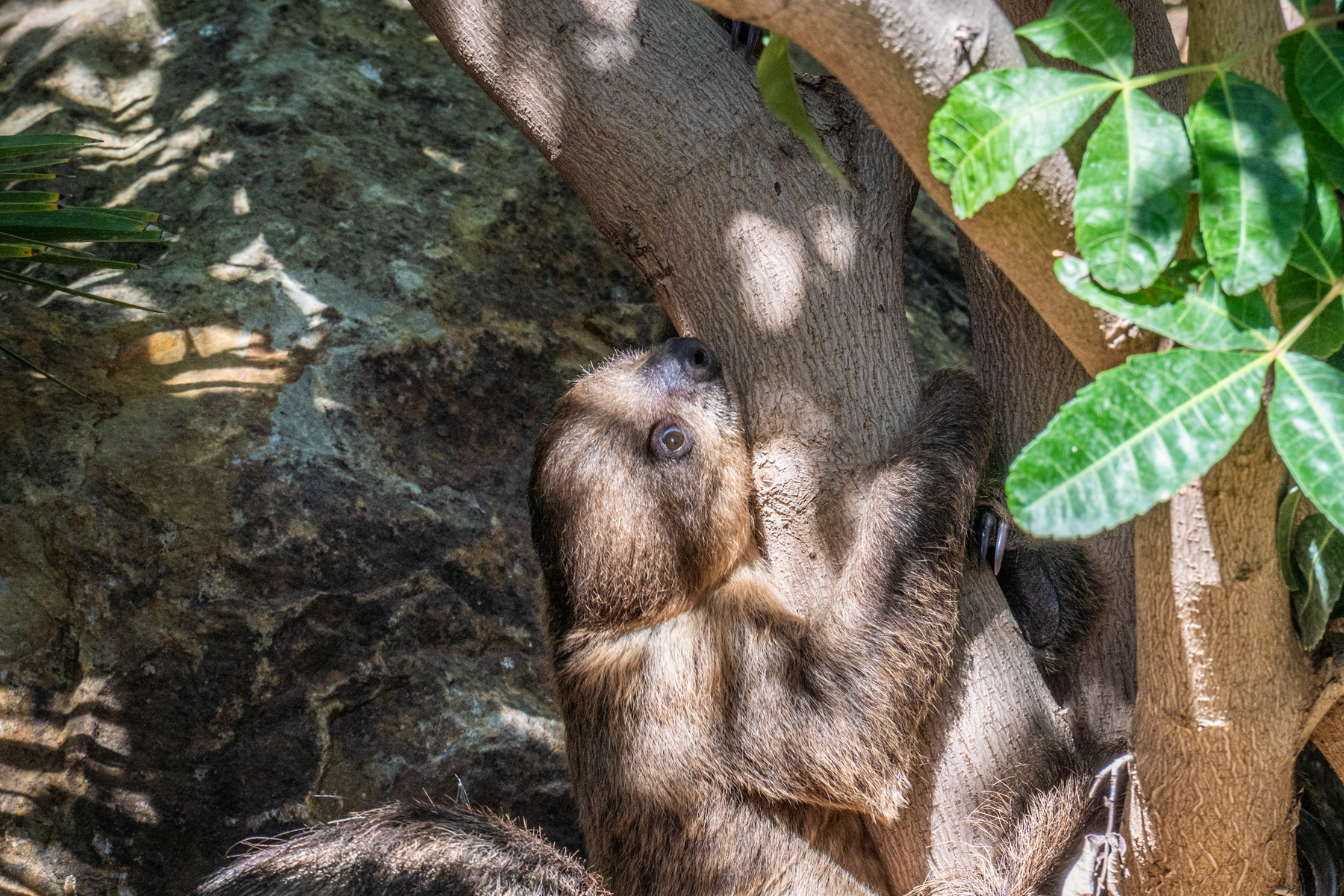
It can take weeks to digest some of its food, spends much of its life in the trees, and its body is adapted to expend very little energy. However, it can also move nimbly through the treetops and has striking canines that are surprising in an animal whose diet is primarily plant-based. The sloth is much more than a slow-moving animal: it is a survival specialist that has developed extraordinary adaptations for living in tropical rainforests . To mark World Sloth Day, celebrated on October 17, BIOPARC Fuengirola is highlighting the fascinating biology of this species and the importance of conserving the ecosystems on which it depends.
The anniversary comes in a particularly significant year for the park. On February 25th, Reina, the female two-toed sloth ( Choloepus didactylus ), gave birth to Priscilla, the first offspring of this species ever born at BIOPARC Fuengirola . Her name was chosen by a vote among park visitors. The baby's sex was confirmed through DNA analysis, as sloths do not have external genitalia that would allow for easy visual differentiation between males and females.
Its growth offers an opportunity to get closer to one of the most surprising species of tropical fauna, whose apparent slowness hides an evolutionary strategy perfectly adapted to its way of life.
A metabolism that consumes less than half of what is expected
The first big surprise about the sloth lies in its body. Its metabolic rate can be between 40 and 45% of what would be expected for a mammal of its weight . This characteristic is closely related to its diet, based mainly on leaves and other vegetation that provide a limited amount of energy.
Instead of compensating for its low energy intake with constant activity, the sloth has evolved to manage its resources with extraordinary efficiency. Its movements are usually slow and deliberate, its locomotion is adapted to arboreal life, and its body makes the most of available energy without unnecessary effort.
But this apparent slowness has nuances. In the forest canopy, where it finds food, shelter, and protection, the sloth can move quite nimbly among the branches. Its way of moving is an adaptation to life in the trees, not an inability to move quickly.
This strategy also influences their body temperature, which can vary depending on environmental conditions and their activity level. Their thermoregulation is less constant than that of many other mammals, so environmental conditions significantly influence their physiological functioning.
Weeks to digest and a visit to the ground that entails risks
Digestion is another process that occurs at an exceptionally rapid pace. In two-toed sloths, food can remain in the digestive system for about a month, although the time depends on the diet and individual conditions. This prolonged digestive process is related to the need to extract maximum energy from a diet based primarily on plants.
One of their most striking behaviors occurs when it's time to relieve themselves. Although they spend most of their lives in the treetops, they typically descend to the ground to defecate about once a week. At that time, they are more exposed to potential predators, which is why this behavior continues to pique the interest of researchers.
In the branches they find food, shelter, and opportunities to remain undetected. Their long, curved claws allow them to hang suspended for extended periods, even while resting. This adaptation is fundamental to their arboreal life and allows them to eat, sleep, and carry out most of their activities without needing to descend to the ground.
Amazing fangs and a small ecosystem hidden in its fur
Another striking feature of the two-toed sloth is its teeth. Despite feeding mainly on leaves and other vegetation, it possesses prominent canines that contrast with the image usually associated with a herbivore.
These teeth play an important defensive role. Although their diet is primarily plant-based, sloths can use them to defend themselves if they feel threatened. The sloth's fur conceals another of its remarkable features. It naturally harbors a variety of microorganisms, fungi, and other microscopic organisms, as well as small invertebrates in some species. This community transforms their fur into a miniature ecosystem and demonstrates the extent to which living beings establish complex relationships with their environment.
Priscilla, the cub that grows at her own pace at BIOPARC Fuengirola
At BIOPARC Fuengirola, Priscilla allows you to observe up close another of the most interesting facets of the species: the development of the young and their close relationship with the mother during the first months of life.
When she was born in February, the little one measured about 20 centimeters, was covered in fur, and instinctively clung to Reina's body with her tiny claws. The birth took place while the mother remained suspended from a branch, in a scene that reflected the extraordinary adaptation of these mammals to life in the trees.
Since then, the cub has been growing up under its mother's care and the observation of the park's Zoology and Veterinary teams. Now it is beginning to gain independence and expand its explorations, in a gradual process that requires respecting its pace and needs.
Her birth also highlighted the importance of reproductive monitoring and specialized care to promote the well-being of animals under human care. In Reina's case, pregnancy monitoring included ultrasound scans performed through a veterinary training program that allowed for voluntary checkups without invasive procedures.
Protect the rainforest to conserve its extraordinary biodiversity
Two-toed sloths inhabit the rainforests of Central and South America, where they depend on tree vegetation for food, movement, and shelter. Although this species is listed globally as least concern, forest loss and fragmentation, along with the illegal wildlife trade, pose threats to sloths and numerous other animals that share their habitat.
To mark World Sloth Day, BIOPARC Fuengirola invites you to discover the extraordinary biology of these mammals and understand why conserving nature means protecting not only the best-known or most threatened species, but also the complex relationships that make life possible in tropical forests.
Priscilla offers us an opportunity to learn more about that world. Her growth reminds us that, in nature, each species follows its own rhythm and that even the most seemingly tranquil animals hold extraordinary stories of adaptation and survival.