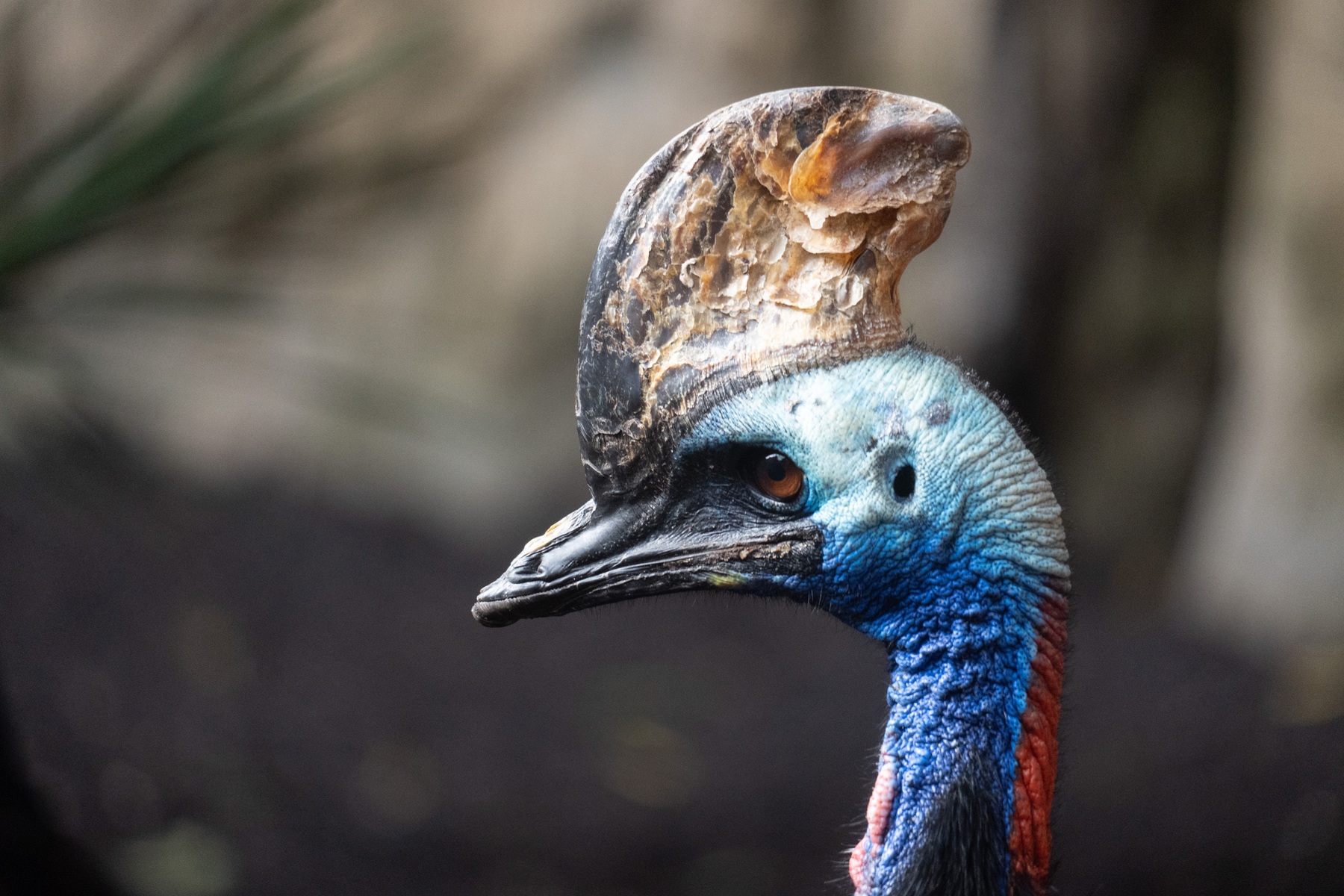
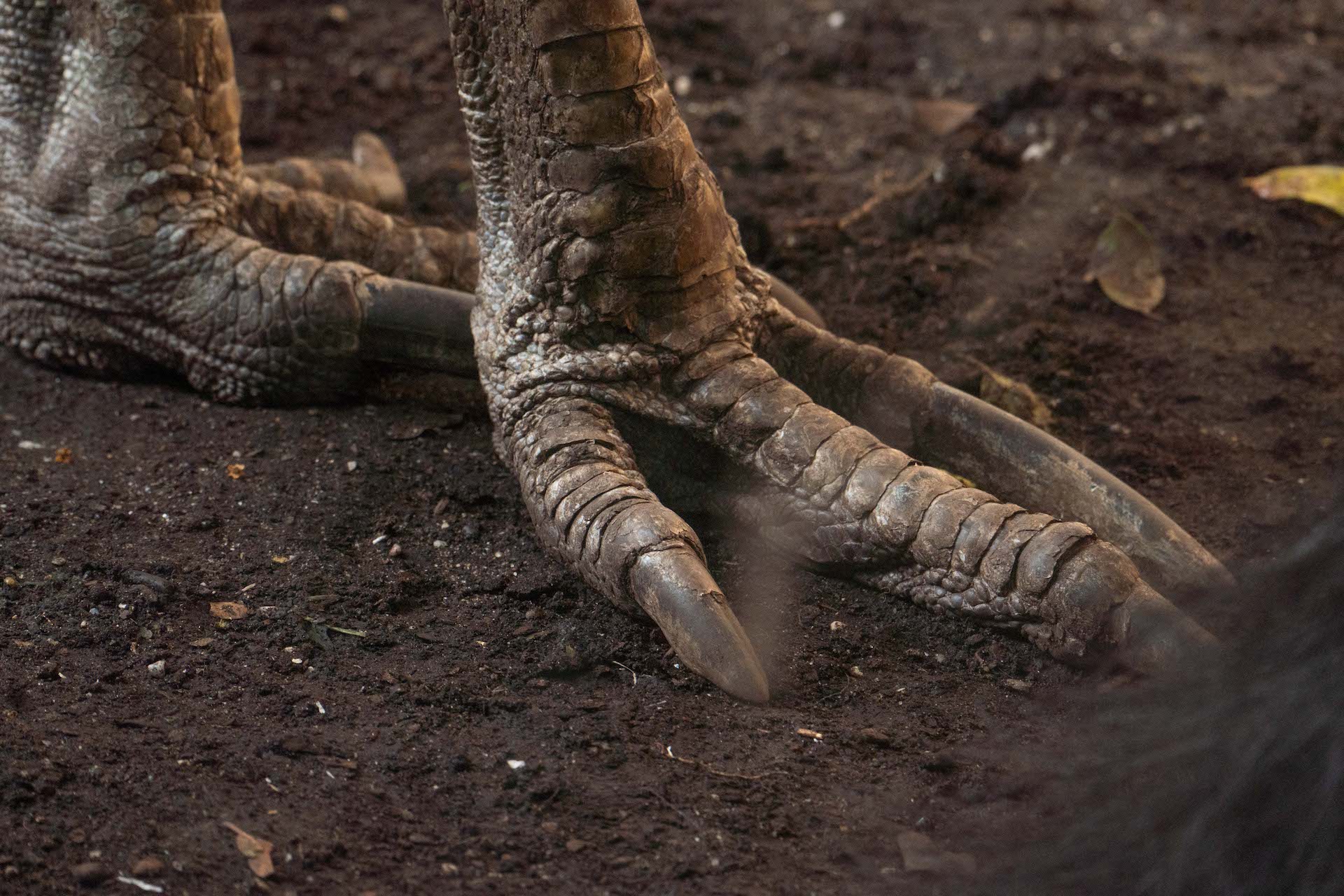
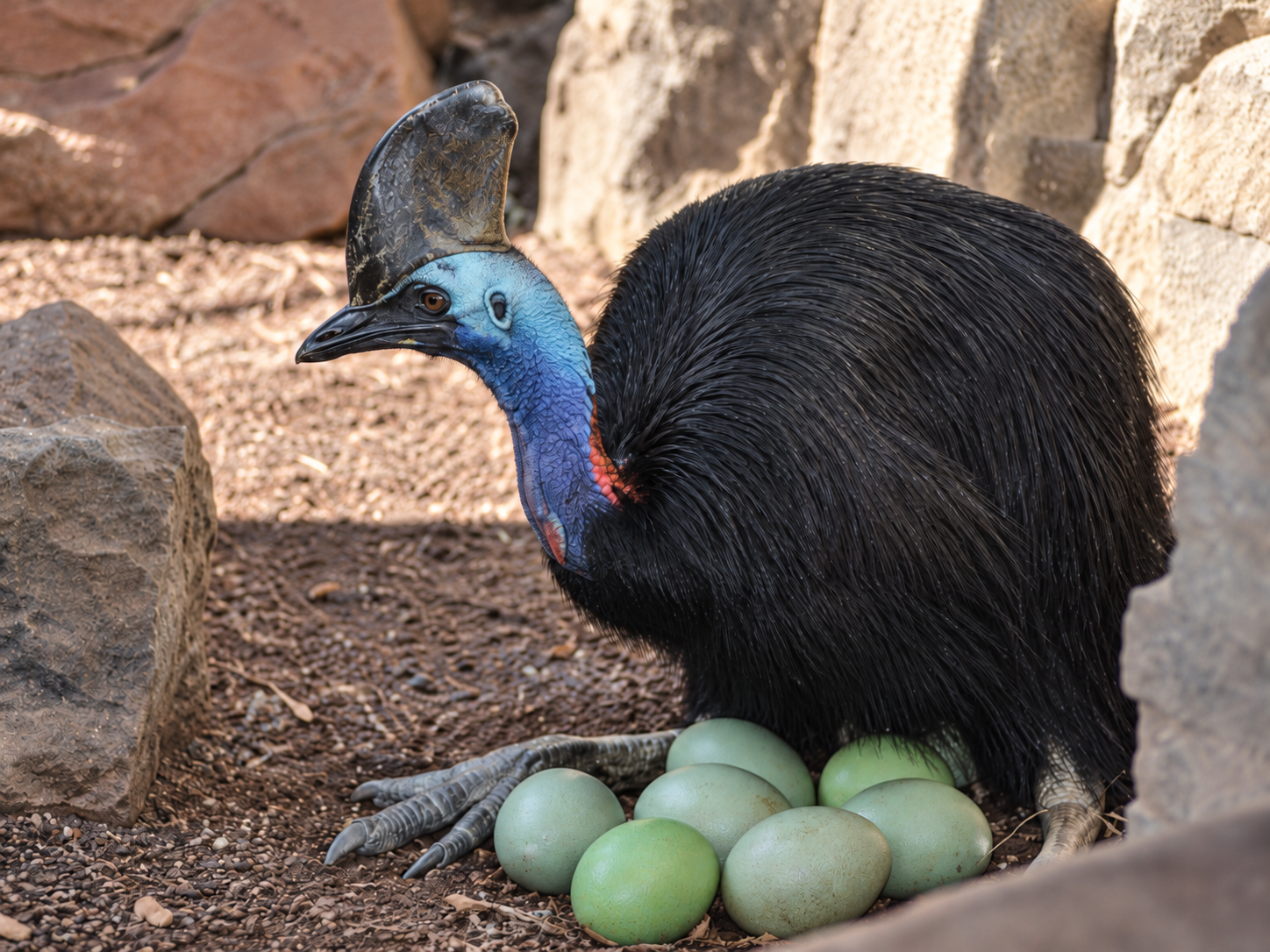
It has a deep blue neck, two striking red folds, a casque on its head, and an enormous claw up to 12 centimeters long on one of its toes. It can run at great speed, cannot fly, and, if cornered, has a powerful kick as a defense mechanism. Its appearance seems to come from another era, but behind the image of the "dangerous bird" lies one of the most extraordinary ecological functions of the rainforests: the cassowary is one of their great gardeners.
To mark World Cassowary Day, celebrated on September 26 , BIOPARC Fuengirola is highlighting this unique species, whose importance to the ecosystem extends far beyond its spectacular appearance. Cassowaries feed primarily on fruit, which they swallow whole, and as they move through the rainforest, they transport and deposit seeds over great distances, helping new plants grow far from the parent tree.
And it's not just about dispersal. In some plant species, the passage through the cassowary's digestive system can make an extraordinary difference in the germination capacity of their seeds.
One of the most striking examples comes from the tropical tree Ryparosa kurrangii , a rare species from the rainforests of northern Queensland, Australia.
In a study published in 2004 in the scientific journal Functional Plant Biology , researchers Bruce L. Webber and Ian E. Woodrow analyzed, among other aspects, the effect of cassowary frugivory on the seeds of this species. The results showed that only 4% of the seeds in the control group germinated, while the seeds that had been ingested by cassowaries and subsequently planted achieved a 92% germination rate . The study concluded that passage through the bird's digestive system significantly improved germination.
This data helps us understand the extent to which the cassowary can be crucial to the dynamics of the rainforest. The study was conducted with the southern cassowary (Casuarius casuarius johnsonii), a subspecies of Casuarius casuarius, the same species as the common cassowary kept at BIOPARC Fuengirola.
“When we talk about the cassowary, we usually focus immediately on its appearance, its size, or that impressive claw it has on one of its toes. However, what is truly extraordinary is discovering that behind that appearance lies an animal with a fundamental role in the functioning of the rainforest,” explains the Zoology team at BIOPARC Fuengirola.
The bird that looks like a dinosaur
The cassowary's appearance is difficult to compare to that of any other bird. Its body is covered in dense black plumage, while its neck and head display a striking combination of blue and red. Above its head rises the casque, a distinctive structure whose function remains a subject of study.
In addition, it has an anatomy adapted to terrestrial life. The cassowary is a flightless bird with particularly robust legs. Its inner toe has a long claw that can reach approximately 12 centimeters in length.
The “father” who keeps the eggs
And if their appearance and ecological role are surprising, their family life is no less so. In this species, it is the male who takes on the incubation of the eggs and the subsequent care of the chicks . After laying the eggs, the female can continue her reproductive cycle while the male remains associated with the nest, incubating the eggs for several weeks and later accompanying and protecting the young.
This behavior makes the cassowary one of those species capable of dismantling many of the preconceived ideas we have about birds: an animal that does not fly, that lives mainly on the ground in the jungle, that may seem intimidating because of its anatomy, and whose male plays a leading role in caring for the offspring.
An essential species
The common cassowary ( Casuarius casuarius ) inhabits the rainforests of New Guinea, nearby islands, and northeastern Australia, where it maintains a close relationship with its ecosystem. As a major frugivore and seed disperser, it plays an essential role in the regeneration and conservation of tropical forests.
The conservation of the cassowary has a dimension that goes far beyond protecting a single species. Its presence is part of a complex web of relationships between animals and plants in which each element plays a role. When a cassowary feeds on a fruit and subsequently disperses its seed, it is contributing to the growth of new plants and the maintenance of forest diversity.
In this sense, protecting the cassowary also means protecting the forests on which it depends and which, in turn, it helps to regenerate.
BIOPARC Fuengirola is committed to the conservation of this unique species as part of its dedication to protecting biodiversity and raising awareness among its visitors about the importance of preserving tropical ecosystems. The park recreates different environments from the world's rainforests and offers visitors the opportunity to observe species like the cassowary, which play essential roles in their native ecosystems.